
Yeung, P. H. (2026). Social perception of TH-stopping and postvocalic rhoticity in Malaysian English. Proceedings of the Linguistic Society of America, 11(1), 6050. https://doi.org/10.3765/plsa.v11i1.6050Paper
Sociophonetic variation in postcolonial Englishes
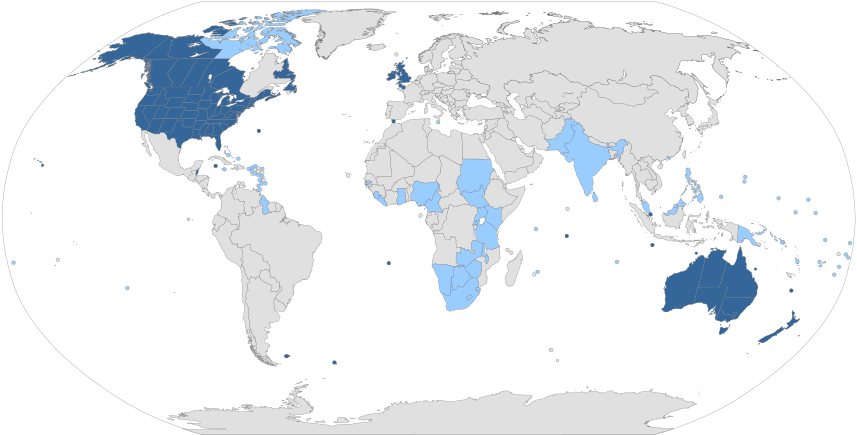
Postcolonial Englishes are varieties of English spoken in former British and American colonies where English coexists with other dominant languages. Research on English sociophonetic variation has focused mostly on monolingual Inner Circle varieties such as American and British English, while Englishes in former colonies are often viewed only through the lens of how well speakers acquire Inner Circle norms.
I argue that postcolonial Englishes are linguistic ecosystems of their own, in which variation carries local indexical meanings. For example, Hong Kong English speakers who identify with the local variety merge the FLEECE and KIT vowels to a greater degree than those who do not (Yeung, 2023, 2024). In Malaysian English, I found that listeners were more likely to identify a speaker as Malaysian Chinese when the speaker used a non-rhotic pronunciation as opposed to a rhotic one (Yeung, 2026). My dissertation data also reveal an interesting paradox: some participants regarded British English as the standard, yet perceived non-rhoticity, a characteristic feature of British English, as less standard than rhoticity.
By documenting how people in postcolonial societies actually speak English, I hope to help develop teaching practices that take local linguistic realities into account.
Publications
Presentations
Yeung, P. H. (November 6, 2025). Interaction between standard language ideology and sociophonetic variation in Malaysian English. Poster presented at the 53rd New Ways of Analyzing Variation Conference (NWAV53), Ann Arbor, MI. Poster
Yeung, P. H. (November 9, 2024). Constructing Hong Kong English identity through vowel mergers: Indexical meanings of local phonological features in the Outer Circle of English. Paper presented at the 52nd New Ways of Analyzing Variation Conference (NWAV52), Miami Beach, FL. Slides
Yeung, P. H. (October 14, 2023). Modeling sociophonetic variation in L2 varieties of English: considerations of proficiency and norm orientation. Poster presented at the 51st New Ways of Analyzing Variation Conference (NWAV51), New York, NY. Poster
Yeung, P. H. (June 16, 2023). “I speak Hong Kong English, not American or British English.”: The effect of language affiliation on vowel production among L2 English speakers in Hong Kong. Paper presented at the 25th conference of the International Association of World Englishes (IAWE25), Stony Brook, NY. Slides
Yeung, P. H. (December 15, 2022). Diachronic reversal of /ɪ/-tensing in Hong Kong English: a result of dialect contact with non-local English varieties? Paper presented at the 7th meeting of the New Ways of Analyzing Variation – Asia Pacific (NWAV-AP7), Bangkok, Thailand. Slides